
English
At Butts Primary School, we believe that a love for language opens up a world of possibilities for our children. Our English curriculum is aligned with the National Curriculum. We set high expectations and clear goals for reading, writing, spelling, and grammar to build your child's confidence. Shared closely with you and your child, these goals shape our daily teaching so we can work together to help them reach their full potential.


Reading
Reading is the foundation of all learning at Butts Primary, and is taught continuously from Nursery through to Year 6.
Mirrors and Windows
We celebrate our diverse school community by choosing books that act as both mirrors and windows for our children.
- Mirror Books: It is vital for children to read books that reflect their own identities, cultures, and experiences. Seeing themselves represented in stories shows our pupils that they are truly valued.
- Window Books: We also want children to look through "windows" into unfamiliar worlds, characters, and cultures.
By engaging with both types of books, our pupils learn about others, develop deep empathy, and build a secure understanding of their own identity. We are committed to continually expanding our library so that our collection of diverse characters, settings, and storylines flourishes.
Early Reading & Phonics
We teach early reading skills step-by-step through the Read Write Inc. (RWI) phonics programme. This structured programme teaches reading through synthetic phonics. Children learn in small ability groups led by trained staff. We regularly monitor and assess their progress to ensure they are always in the right group for their needs. To help you with blending and sounds at home, we host workshops and share helpful video guides. You can watch them here: Early Reading Phonics Videos. Once children can decode words fluently, they move on to Oxford Reading Tree staged books and enjoy independent use of our school library.
https://home.oxfordowl.co.uk/reading/reading-schemes-oxford-levels/read-write-inc-phonics-guide/
Targeted Reading Support
We ensure no child is left behind. Pupils requiring additional literacy support can access tailored interventions, including:
- Bug Club digital resources
- Daily reading intervention groups
- Targeted after-school tuition
- The Beanstalk reading programme
Guided Reading & Comprehension Mastery
Guided reading is central to developing advanced comprehension. In both Key Stage 1 and Key Stage 2, teachers target discrete National Curriculum reading domains using whole-class teaching and differentiated texts.
To deliver a high-impact curriculum, we use Comprehension Crusher by Grammarsaurus. This research-backed, structured scheme uses a repetitive approach to mastery to build confident, fluent readers who can navigate diverse literary genres - from classic fiction, poetry to modern non-fiction.
Key elements of our reading sessions include:
- Paired Texts: Every unit features two matched texts. Teachers use the first text to model specific strategies, while children apply these skills independently to a second, "unseen" text.
- Domain-Specific Focus: Lessons explicitly target vocabulary, retrieval, inference, and summarisation.
- Fluency & Retention: Regular, short-burst practice embeds advanced vocabulary and reading skills into pupils' long-term memory.
- Context & Prior Knowledge: Each unit begins by activating prior knowledge. Teachers contextualise the text by discussing its historical period, setting, or character relationships.
- Tiered Vocabulary: A structured approach to vocabulary builds a robust language foundation, improving overall comprehension and independence.
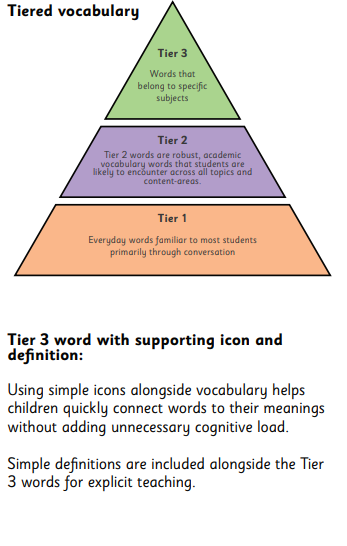
Reading For Pleasure
Every class in school has a dedicated area for their own class library. On these shelves are a wide range of books both in terms of subject and level. We want children to be able to change their reading books regularly and be able to find something to read within their own classrooms which captures their interests. We really encourage our pupils to take control of the books they have access to. We are ALWAYS open for suggestions and requests from our children: if there is a particular author or series of books which interests them, we will always do our best to make sure this becomes a part of their class library.
Reading Aloud
Throughout the week, children will have dedicated time to reading a class novel or exploring a picture book or non-fiction book.
Writing
Writing & Handwriting
We believe every child should be able to communicate their knowledge, ideas, and emotions confidently through the written word.
The Writing Process
Writing instruction begins in Nursery and is predominantly rooted in high-quality novels, which frequently connect to our wider foundation subjects.
- Extended Writing: Pupils work towards producing extended pieces of independent writing each week, both in English lessons and across the wider curriculum.
- Edit & Redraft: Children are taught to critically review, edit, and redraft their work to improve quality.
- Genre Progression: Our comprehensive genre progression map ensures children encounter a diverse range of writing styles across each key stage. Genres are regularly revisited to deepen understanding and build cumulative skills year-on-year.
Handwriting
Handwriting is taught daily in accordance with National Curriculum requirements.
- EYFS & KS1: Children focus on print letter formation that aligns directly with the sequence of their RWI phonics sounds.
- Key Stage 2: Joined handwriting is introduced in Year 2, with the expectation that all pupils develop a fluent, legible, joined style by the end of Year 6.
- Recognition: Pupils who consistently meet Age-Related Expectations (ARE) for handwriting are celebrated and awarded a school handwriting pen.
Writing Assessment
Assessment is continuous throughout each unit, culminating in an independent writing piece. To guarantee rigorous quality assurance, we validate our internal data using comparative judgements and external moderation. This data directly shapes our medium-term planning.
Spelling, Grammar, and Punctuation (SPaG)
Grammar and punctuation are integrated daily into English lessons using the Grammarsaurus SPaG scheme, establishing meaningful links between technical skills and class texts.
Teachers use unit plans to target ambitious, year-group-specific grammar objectives. These concepts are built into medium-term plans and are revisited frequently across the academic year to ensure retention. Spellings are set, practiced, and tested on a weekly basis.
Speaking and Listening
We empower our pupils to articulate their thoughts clearly, confidently, and using an enriched vocabulary. Oral communication is embedded across our broad and balanced curriculum
In the Early Years (Nursery and Reception), communication is prioritised through targeted, evidence-based frameworks, including:
- The Wellcomm programme
- Talk Boost interventions
- The Little Learners Pragmatics group
Please find below the progression map for English. This shows all the objectives taught from Year 1 progressing to Year 6.
English Progression Map
Recommended Reading List for each Year Group
- Recommended-reading-books-for-reception.pdfPDF File
- Recommended-reading-books-for-year-1.pdfPDF File
- Recommended-reading-books-for-year-2.pdfPDF File
- Recommended-reading-books-for-year-3.pdfPDF File
- Recommended-reading-books-for-year-4.pdfPDF File
- Recommended-reading-books-for-year-5.pdfPDF File
- Recommended-reading-books-for-year-6.pdfPDF File